- Walter Dean Myers Honor Book for Outstanding Children’s Literature
- Stonewall Book Award Winner
- Barnes & Noble Best YA Book of the Year
- Amazon Best Book of the Year
“For as long as I could remember, I had been apologizing for existing, for trying to be who I was, to live the life I was meant to lead.”- Meredith Russo, If I Was Your Girl
Published in 2016, If I was Your Girl by Meredith Russo, tells the story of Amanda Hardy as she navigates a new high school in a new town. There are a lot of ‘firsts’ for her as she discovers the ins and outs of Lambertville, Tennessee. Her first football game. Her first real friends. Her first high school party. Her first boyfriend. And her first kiss. But Amanda is harboring a secret that could destroy everything, including her happiness.
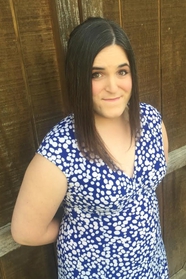
Meredith Russo was born and raised in Tennessee where she graduated with a degree in Creative Writing and Women’s Studies. In 2013, she began living the life she was meant to lead and is now a LGBTQIA+ activist and author. Part of her experiences living as a trans woman was the inspiration for her award winning novel, If I Was Your Girl. Similar to Amanda, she loves Star Wars.
This contemporary realistic fiction novel covers a sensitive and somewhat controversial topic in today’s world. The main character, Amanda, is a young high school girl who is grappling with a serious case of gender identity disorder. She believes wholeheartedly that she was meant to be a girl, even though she was born as a boy. In this book Amanda transitions fully from male to female and easily passes when she re-enters society. The importance of identifying with one’s own life is a key reason that children’s books have children as protagonists (Tunnel et al, 2016, p. 139). While readers may not be able to identify with her specific situation, they will be able to identify with other aspects of her life- divorced parents, high school, making new friends, dating, etc. Kids like to read about characters who are close to their own age because they are able to identify with them and feel a connection to them. Realistic fiction also allows readers to examine “human beings facing and overcoming the challenges living in today’s world,” (Tunnel et al, 2016, p. 145). Amanda not only faces extreme challenges, she perseveres through and is able to overcome them giving the reader a feeling of hope at the end of the book. Contemporary fiction is ever evolving and covering new topics and subjects as they become more mainstream. This book is an excellent example of how far the genre has come.

Yes, this book is considered realistic fiction, but I would say that it would also be considered a controversial book by many. This can be an uncomfortable topic to discuss, and one that is fairly new for older generations to comprehend. As educators, we need to keep in mind that “fear of controversy brings forth the practice of “self-censorship” in which teachers keep books off their shelves because they do not want to face challenges from parents or community members,” (Tunnel et al, 2016, p. 216). But it is our job to provide multiple perspectives for our students to engage with- if we don’t, they are the ones who end up losing. We can assume that it may not be an issue for our students-it being any social/political topic-but if we talk about it then maybe more kids will feel comfortable talking about it, opening the lines of communication. I also sometimes wonder if we, as adults and educators, are more reserved when it comes to topics such as this one, but that our students are more accepting and open. Regardless, this book would be a strong text to use for building students’ critical literacy. Uncomfortable subject matter offers insight, helps develop attitudes and skills for dealing successfully with life, and fosters hope (Tunnel et al, 2016, p. 218). This book allows the reader to really get to know Amanda and the experiences she has had when it comes to her gender. It offers entry into multiple perspectives dealing with this topic and students could grapple with the age-old question of, “What would you do?”. Would you be accepting like Layla- “The truth is that you’re my friend, Amanda,” (Russo, 2016, p. 235)- or angry like Parker-“You made me look like a dickhead for months, and now you don’t got Grant to look out for you,” (Russo, 2016, p. 231)- as he assaults her? Do you understand Grant when he doesn’t come after Amanda? Or when he says, “I just wish you were a girl…I mean, I wish you were never…I wish you were always…” (Russo, 2016, p. 271)? Or maybe you think Amanda is not understanding enough when she almost walks away from Grant. Regardless, students have the opportunity to examine the points of view of multiple characters and how they react to the truth about Amanda. They then can take their new knowledge and apply it to the real world. What is happening in society today? What can we do as a collective to make life better for people dealing with gender identity disorder?
 Good Books
Hi Emily, you make a great point about educators needing to provide books with multiple perspectives. I think that it is so important to provide literature that shows different experiences. You never know how kids will respond, but maybe this book could resonate with a student who is facing similar feelings as Amanda, but doesn’t have the language to describe it yet. You are so right, if we do not provide literature with different lenses, it is the students will suffer.
LikeLike