“The idea of the extraordinary happening in the context of the ordinary is what’s fascinating to me.”- Chris Van Allsburg

With a stroke of luck, Allsburg stumbled upon the art program at the University of Michigan. “It had never crossed my mind that someone could go to college and make art,” he said in an interview. While there, he discovered his love for sculpture and originally pursued that as a career. Although Chris would draw pictures at night, it was his wife who encouraged him to share those pictures with the rest of the world. In 1979, he created the story and pictures for the Caldecott winner, The Garden of Abdul Gasazi. In 1991, Van Allsburg published The Wretched Stone which is a children’s fiction picture book.
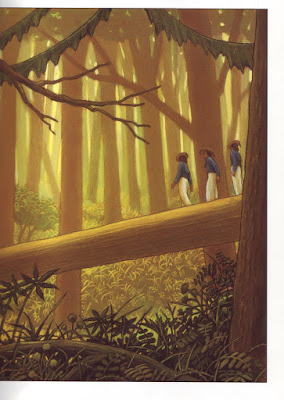
The Wretched Stone is a story that is told from the point of view of a ship’s captain. In this way the reader is able, “to participate in the experience instead of being led through it,” (Tunnel et al, 2016, p. 29). After exploring an island, the crew return to the ship with a rock that is “unbelievably heavy, requiring six strong men to lift it.” It is not long before the crew becomes fascinated with the rock and slack on their on-board duties. Will they be able to pull themselves away or are they all doomed as a storm moves in on the boat out at sea?
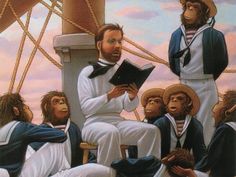
While the story is entertaining, it is the illustrations that take center stage in this book. They set the mood of the story and move the plot along. The characteristic I am drawn to the most is the use of color by Allsburg. The text has an eerie tone, but the color scheme keeps the mood light and uplifting. Not only that, but they also lend themselves nicely to the setting of the story- out at sea. There are different shades of blues, whites, and browns that fill the pages. My favorite part of each page is the sky because of my love for a brilliant sunset or sunrise. Allsburg alternates between sunsets, stormy skies and small cotton ball shaped clouds. I can imagine this being a strong text to use while teaching descriptive writing. Show the reader, don’t tell the reader.
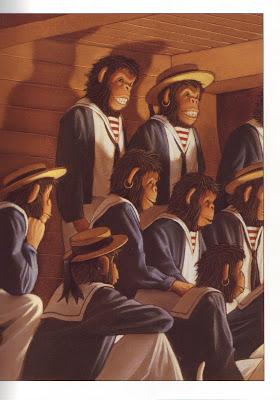
I think it is interesting how Van Allsburg does not fully show any of the character faces until they are transformed into apes. Throughout the book, the reader can only see part of their faces, or their profile. I think this is so that the reader stays somewhat removed from them. In doing so, when you turn the page and see the apes smiling, staring at the glowing rock, you are shocked. It makes the lesson that much more powerful.
I love using Chris Van Allsburg’s books during out narrative unit. He does a fantastic job of leaving certain details out, so that the reader is “forced” into creating their own thinking and imagining. Some may not like the guessing game and would prefer a more direct and straightforward book, but it keeps the reader on their toes. I think that this would be a great book to give to students with no expectations, but rather ask them what they notice and what they see. Children are “arguably more visually aware and alert than many adults,” (Tunnel et al, 2016, p. 36). Then you could move into a lesson on inferences and have students practice while reading the text.
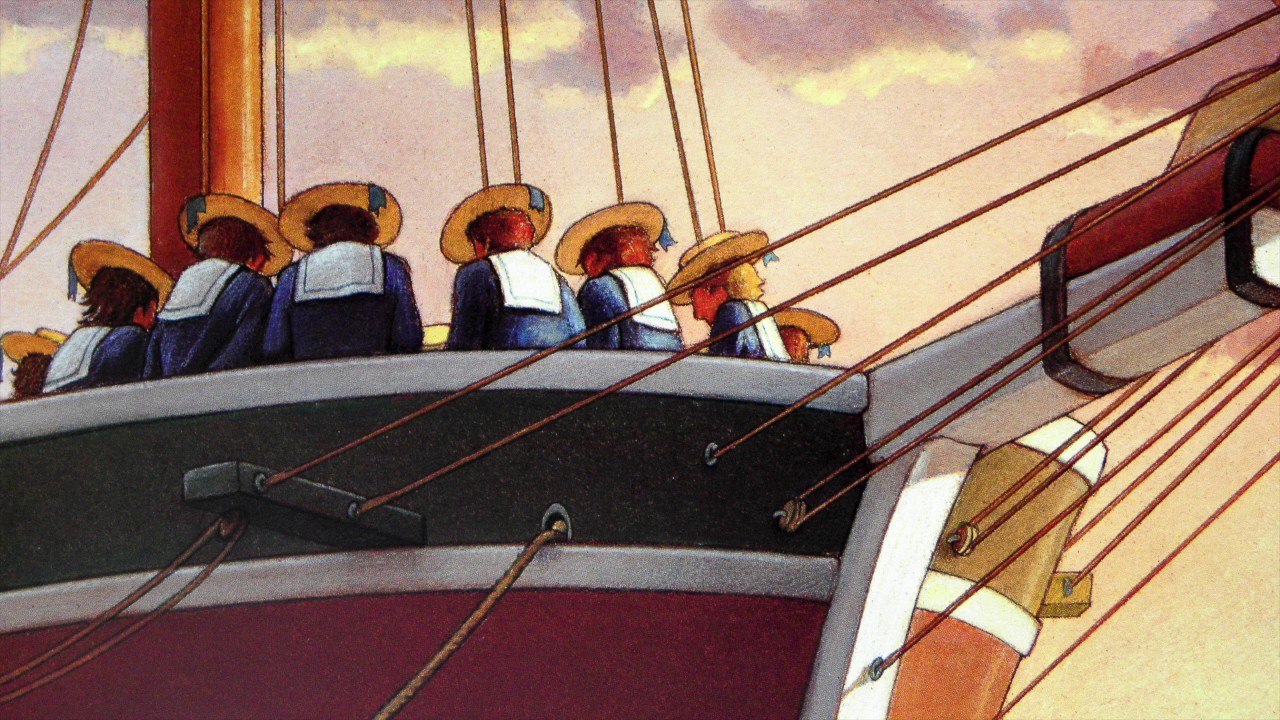
I believe the lesson in this book is directed towards technology and the detrimental effects it can have on its users. This “glowing rock” captures the attention of the crew in no time and turns them into thoughtless, unmotivated apes. It isn’t until the captain draws them away from the rock, reading to them and playing music for them, that they are able to eventually return to normal. Throughout the book, there is a hint of Van Allsburg’s humor, ending with his tongue in cheek remark of the crew loving the local food of bananas.
 Good Books